Does a Hail Damage Claim Raise My Car Insurance Rates?
TL;DR: Wondering, “does hail damage claim raise car insurance rates”? This blog explains how coverage, claims history, and regional pricing can affect what you pay after a hailstorm—and explores your options for repairing the damage.
- Coverage matters: Comprehensive coverage typically covers hail damage, subject to your deductible and policy terms. Collision coverage alone does not.
- Rate increases aren’t automatic: A hail claim may affect your insurance costs, depending on your provider, claims history, and applicable rules.
- Regional pricing can change: Widespread storm damage may lead insurers to adjust rates across an area, even for drivers who haven’t filed claims.
- Repair options offer flexibility: Dent Clinic in Brookfield, Wisconsin, offers hail damage repairs without involving insurance. A free inspection can help you understand the damage before deciding your next step.
We’ve likely all been there: a bout of extreme weather and the next thing you know your car is damaged. It’s one of the downsides of a vehicle’s daily exposure to the elements, isn’t it?
Adding insult to injury, though, is not all kinds of damage to your car mean the same thing to your insurance provider. In some cases, providers seem more than happy to process your claim without issue. But in others, you’re led through a maze of questions and categorizations to deduce exactly how the damage might affect your rate. It’s one of the, ahem, fun bits of insurance policies and one that’s unlikely to change anytime soon.
Thankfully, there’s no law requiring that you report hail damage to your car insurance company. But that complexity is what leads many policy holders to just forego the claim process entirely. Fear of the unknown, it would seem, is a big motivator. But are we fearing the potential of a rate change in these cases, or are we fearing the inevitable?
More to the point: if your car suffers from damage as a result of hail damage, are you covered? And even more importantly: what will that mean for your rates?
In this explainer, we’re going to touch on the technical and nuanced topic of insurance policies and hail damage. If you’ve ever asked yourself, “does a hail damage claim raise my insurance rates,” this one’s for you.
The Complexity of Auto Insurance – Rates vs Premiums
We alluded to it up top, but to put a finer point on it: coverage for auto insurance policies is hardly an open and shut case. In most instances, the cost of coverage is determined as a “rate” by a variety of factors when you first sign up:
- The insurance provider you choose
- Where you live
- The year, make, and model of your vehicle
- And more
But the initial audit that takes place when you request insurance also takes into account details much more personal in nature:
- Your driving record
- Your age
- How much and how far you drive on average
- Your credit score
- And more
This leads to what is known as a “premium,” or the price a driver will pay for their coverage within their rate range.
As you can imagine, each of these details can lead to wildly different coverages and costs for different drivers. A new driver in an urban area driving a luxury vehicle is going to be covered very differently than, say, an elderly driver who has been in a few wrecks and lives in a rural community. And each of these differences makes for different premiums.
Determining Your Coverage Level
Okay, all that is to say the amount you pay to be covered won’t look precisely like your neighbor’s annual bill. But things get even trickier as we layer in coverage levels as another variable in the whole conversation. That’s because insurance providers don’t just offer a single kind of auto policy. They usually offer multiple, and each has rules about what is and isn’t covered.
The technical terms for this that you’ve likely seen mentioned elsewhere are comprehensive insurance coverage and collision.
Collision plans are typically a more affordable option for drivers, and that’s because these policies typically just cover instances in which your car crashes into something or rolls over while on the road. Wrecks, fender benders, utility pole hits, and more that are not your fault are covered under these policies. Anything else, from hail damage to a deer running into you while you’re driving? Sorry, but no.
With comprehensive coverage, you’re covered, ahem, comprehensively. Under these policies, any kind of damage to your vehicle that isn’t a result of your fault is covered. And that means everything from hail falling on your car to that pesky deer running out in front of you are covered by your policy.
If you need the quick and dirty, it’s this: collision only covers you when your car collides with another object on the road while comprehensive coverage covers any and all damage.
Rate Changes
As you can imagine, all of this is outlined in the novel-length policy document that you got (and likely didn’t read—we see you) when you first signed up for insurance coverage. But without the risk of getting lost in all that paperwork, you’re likely left wondering “can you claim hail damage on car insurance?” The answer is sure, but only comprehensive policyholders will have their claim considered.
If you have collision-only, your policy doesn’t cover events like environmental damage or other acts of nature. You are welcome to file a claim in these cases, but it will be immediately denied by your policy provider.
But if you’re a comprehensive coverage policyholder? Yes, file away! Your insurance provider would consider the details of your claim like any other incident with your vehicle, paperwork and all. That isn’t to say every claim will be automatically approved. But at least you won’t waste your time with a non-starter like a collision policyholder would.
So, then, let’s get to the heart of the matter. The reason you’re reading this article in the first place. Namely: does a hail damage claim raise car insurance rates?
Thankfully, for things like hail damage you’re covered by a few variables that make it far less likely that your rate will automatically go up.
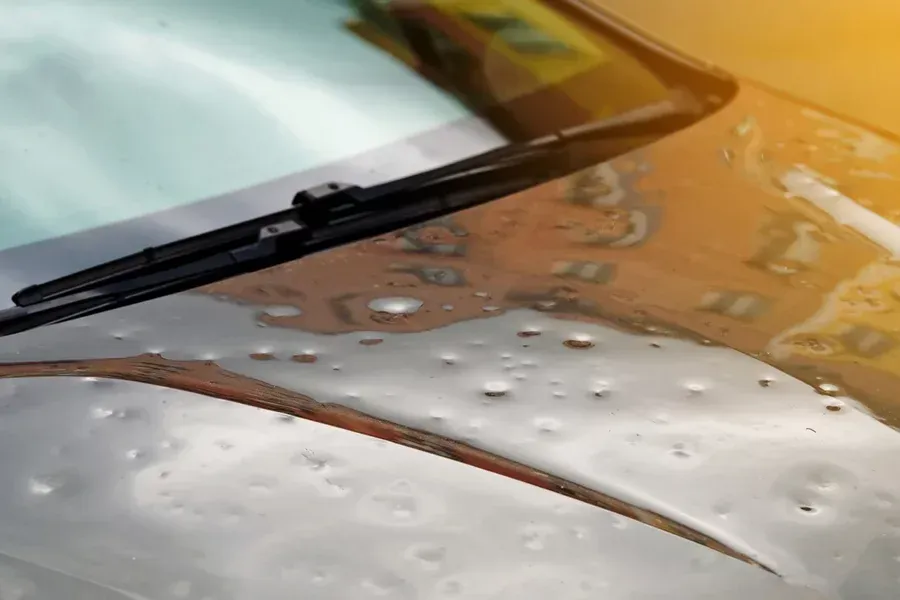
First off: a hailstorm is an act of nature and is inherently covered under your comprehensive policy. The damage did not occur because of your negligence or because of any fault of yours as a driver, and, as such, isn’t subject to the same protocol if, say, you collide with another car when you’re intoxicated.
Next up: a hailstorm is hardly a localized, one-off event. Hail often damages towns or entire zip codes as storms blow through. And this often leads to insurance providers fielding numerous claims from your friends and neighbors alike. While they may issue a region-wide repricing structure following a catastrophic event, this isn’t to be confused with a hit to your premium. In cases of hail damage, the insurance provider is more likely to consider altering your region’s rates than your individual policy.
Lastly: If the hail damage is a one-off event, it’s (hopefully) one of the few times you ever have to interface with your insurance provider. And they like it that way. But if you have a history of filing claim after claim for every little thing that happens with your vehicle, that flips the script. In these cases, a provider may look at your policy and claims history and determine a higher rate is necessary due to their perception of a higher liability.
The Bottom Line
We told you insurance coverage is nuanced, didn’t we? But we hope that we were able to shine at least a little light on the subject.
If you’re reading this, we’re guessing it’s because your car has experienced hail damage and you’re wondering what next to do. You now know the answer to the question: “does hail damage affect insurance premiums,” but the next steps aren’t quite so clear.
While we can’t tell you if you should report hail damage to the car insurance provider or not, we will tell you the path of least resistance is often the easiest. And nothing is easier than working with Dent Clinic on auto damage.
If you want to avoid having to claim hail damage on car insurance entirely, Dent Clinic can help you repair hail damage quickly and comprehensively.
Our team in Brookfield, WI has helped drivers like you get their vehicles right after hail damage, without involving insurance companies at all. If there’s any question of whether claiming hail damage will affect your insurance coverage, our team is ready to get you back on the road without the headaches, paperwork, or rhetorical questions.
Schedule your free hail damage inspection today!
Related Articles