Ceramic Coating vs Paint Protection Film: Which Is Better for My Car?
TL;DR:
When comparing ceramic coating vs. paint protection film, you should choose ceramic coating for protection from environmental damage, PPF for rock chips and road debris, or combine both for more complete paint protection.
- PPF protects against rock chips and road debris.
- Ceramic coating protects against UV rays, stains, water spots, and contaminants.
- PPF typically lasts 5 to 10 years, while ceramic coating lasts about 2 to 5 years.
- Ceramic coating costs less for full-vehicle coverage, while PPF is often used on high-impact areas.
- Using both gives you physical impact protection plus chemical and environmental protection.
Every week, someone rolls into our shop and asks: ceramic coating vs. a paint protection film - what’s the difference, and which one will protect my car better?
On the surface, it’s a simple question, but the answer always depends on many different factors and not as easy as choosing which one wind. Both products will guard your paint, but they do so in entirely different ways.
Our team is here to help you understand what each one does so you can make the right choice for your car.
What’s the Difference Between Ceramic Coating and Paint Protection Film?
Ceramic coating is a liquid polymer. You apply it to your paint, and it bonds at a
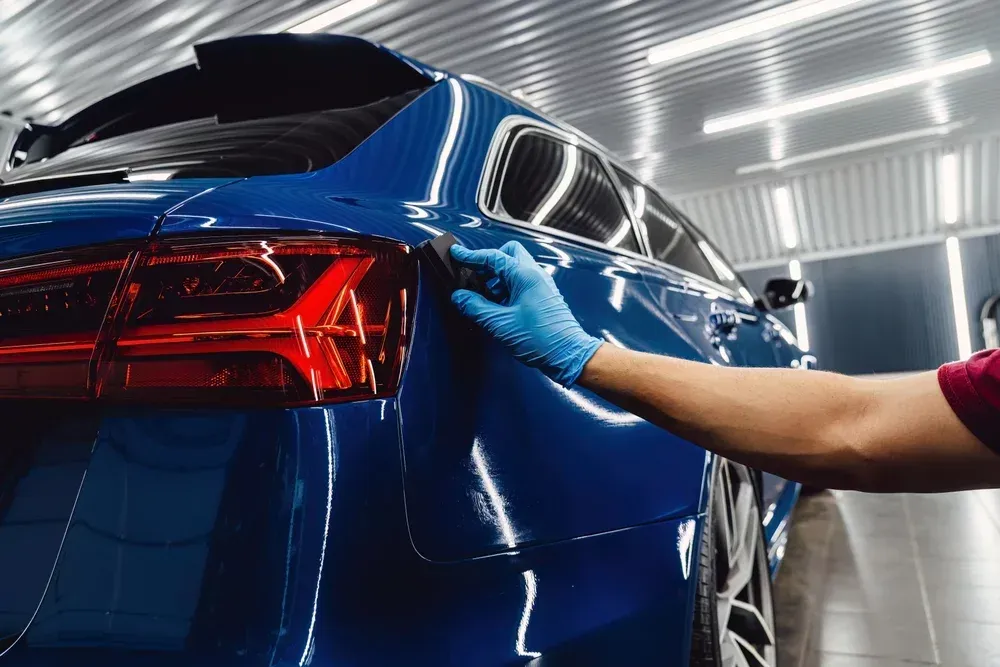
chemical level, curing into a hard, glass-like layer that sits on top of your clear coat. It doesn't add thickness you can feel or see. It just makes your paint slicker, glossier, and harder to stain.
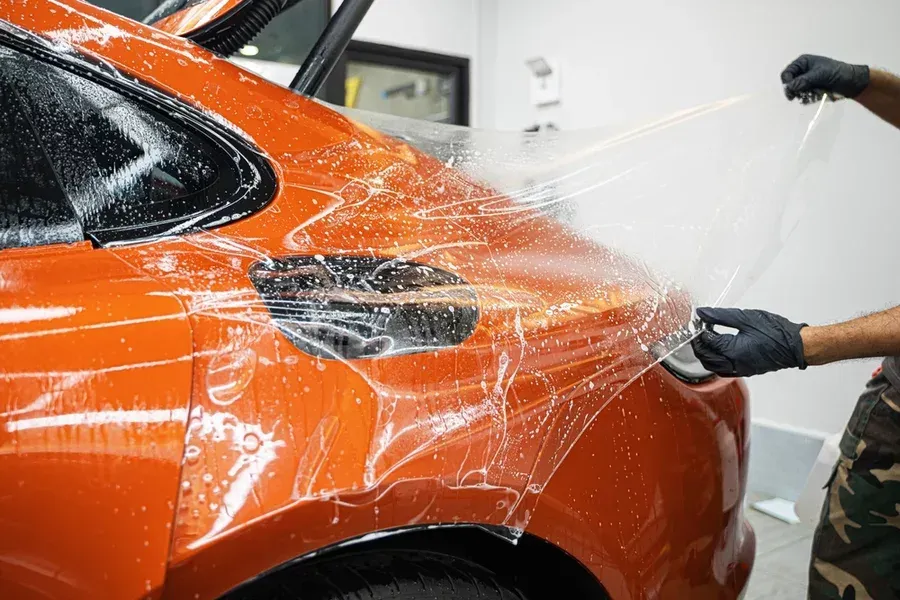
Paint protection film works differently. It's a thick, clear urethane film applied directly to your painted panels. Think of it as a second skin for your car, one that physically absorbs hits instead of just resisting chemicals. When you compare car paint protection film vs. ceramic coating side by side, the core distinction comes down to this: one is a shield, and the other is a treatment.
Neither product replaces good habits like regular washing and garage parking, but each one gives your paint a serious head start against everyday wear. That's why so many owners end up asking us about both instead of choosing one over the other.
Does Ceramic Coating Protect Car Paint?
Yes, though not from everything. It repels water, blocks UV rays, and keeps contaminants like tree sap and bird droppings from etching into your clear coat. What it won't do is stop a rock from chipping your paint on the highway.
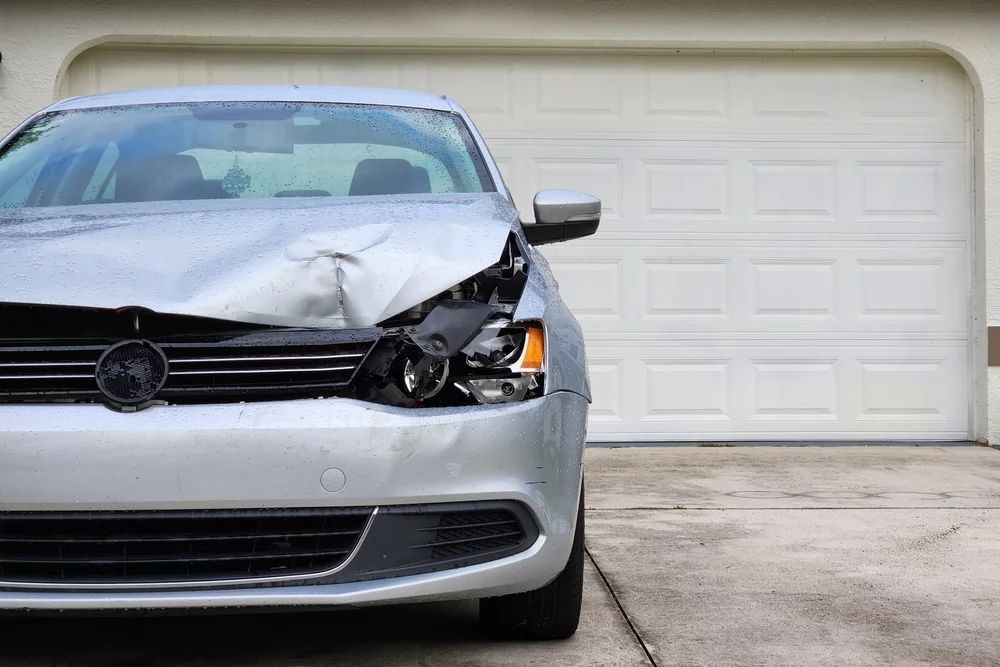
That's because ceramic coating is thin, measured in microns, and it has no cushioning ability. A pebble kicked up by the truck ahead of you will chip right through it, just like it would chip bare paint. If rock chips are your main worry, ceramic coating alone won't solve that problem. You'll need a physical barrier for that job, and that's exactly the gap film is built to fill.
Can You Put Ceramic Coating Over a Paint Protection Film?
Yes, and honestly, we recommend it often. Applying ceramic coating over paint protection film gives you the best of both. The film absorbs the physical impacts, while the coating adds hydrophobic properties and extra UV resistance on top.
Without a ceramic layer, PPF can look dull faster and attract grime that's tougher to rinse away. Adding a coating on top keeps that film looking newer for longer and makes maintenance washes go quicker. So if you've already invested in film, don't skip the coating. It's a smart way to protect your investment and cut down on upkeep, and it's a combination our technicians install often for exactly that reason.
Which One Lasts Longer: PPF or the Ceramic Coating?
Paint protection film generally outlasts ceramic coating by a wide margin. High-quality PPF can hold up for five to ten years with proper care, while most ceramic coatings last two to five years depending on the tier of product used and how well you maintain the surface.
That doesn't automatically make PPF the better buy. Longevity is only one factor. Coating is far less expensive and covers your entire vehicle easily, while film is usually reserved for high-impact zones like the hood, mirrors, and front bumper due to cost. If budget matters, that trade-off is worth thinking through before you commit to either one.
Keep in mind that neither product is truly "set it and forget it." Film needs occasional edge inspections to catch lifting before dirt gets underneath it, and coating performs best when you stick to pH-neutral soap during washes. A little upkeep on either one stretches its lifespan considerably.
What about Ceramic Coating vs. Wax vs. Paint Protection Film?
Wax still has its place, but it's the weakest of the three. A coat of wax might last a few weeks to a couple months before it breaks down from washing, sun exposure, and general wear. It adds shine and light water resistance, nothing more.
When you stack up ceramic coating vs. wax vs. paint protection film, wax is the short-term touch-up, coating is the long-term chemical shield, and film is the physical armor. None of them do the exact same job, so picking one usually comes down to what kind of damage worries you most and how much upkeep you're willing to handle.
So, Which to Choose? Ceramic Coating or the Paint Protection Film?
Deciding what's better between ceramic coating and paint protection film really depends on your driving habits. If you spend a lot of time on highways or gravel roads, film on your high-impact panels will save your paint from chips that coating simply can't stop. If your bigger concern is sun exposure, water spots, and keeping your car easier to clean, coating does that job well on its own.
For a lot of drivers, the smartest move is combining both. Film on the front end for impact protection, ceramic coating over the film and the rest of the vehicle for chemical resistance and shine. That combination covers nearly every threat your paint will face throughout the year, from winter road salt to summer highway debris.
There's no single right answer when it comes to ceramic coating vs. paint protection film. It comes down to your car, your budget, and how you drive. Our team can walk you through your options and help you land on a package that fits your vehicle.
Book a free consultation to find the right protection package for your car!
Related Articles