Faded Car Paint: Why Does it Happen, How Can I Prevent It, and What Can I Do to Reverse It?
TL;DR:
Faded car paint is a common issue caused by sun exposure, oxidation, environmental damage, and improper car care—but it doesn’t always mean your paint is beyond saving. This blog explains why paint fades, how to restore it, and the best ways to prevent future damage so your vehicle keeps its glossy finish longer.
Key takeaways:
- Sun damage and UV exposure are the leading causes of faded car paint
- Oxidation occurs when weakened clear coat allows paint to break down
- Environmental contaminants like bird droppings and acid rain accelerate fading
- Paint correction, repainting, or paintless clear coat restoration can restore damaged areas
- Regular washing, waxing, smart parking, and paint protection help prevent paint fading
All cars roll off the assembly line with glossy paint jobs. But somewhere along the way, many drivers start to notice dull paint on their car. What causes car paint to fade, can you prevent it, and what can you do about it once you’ve noticed faded paint? Let’s uncover the answers together now.
What Causes Faded Car Paint?
The top four causes that a car’s paint begins to fade are as follows:
Sun Damage (UV Exposure)
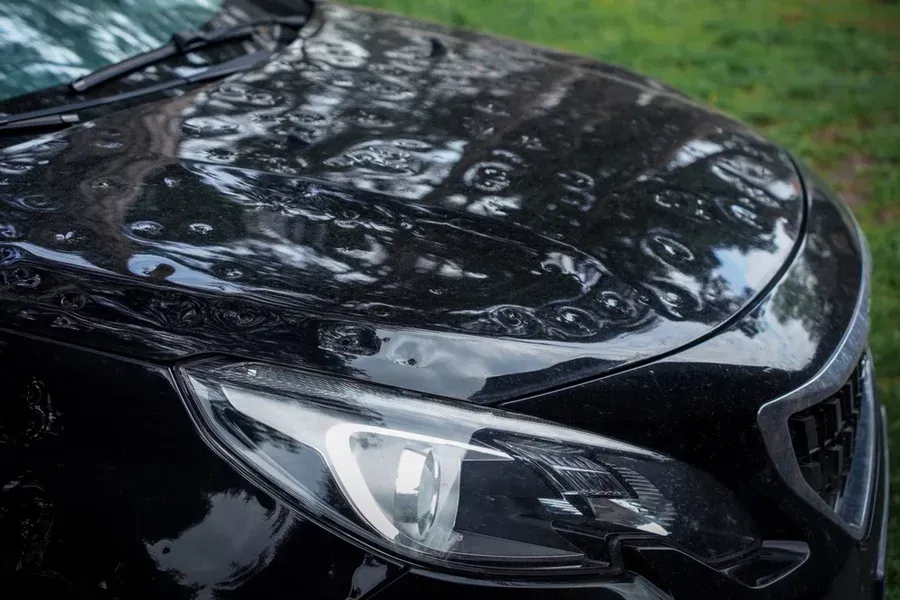
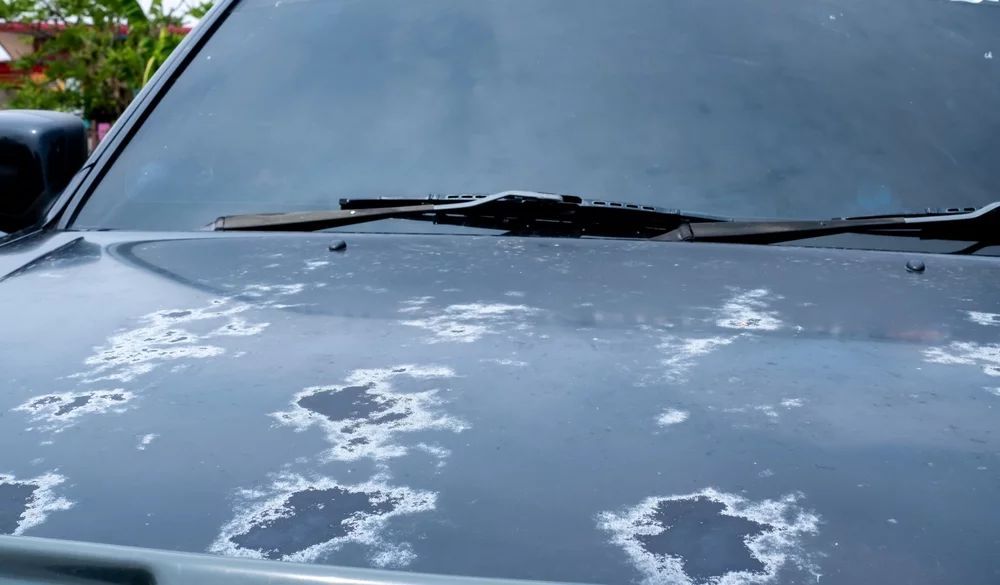
Sun damage causes paint fading on all types of cars, including those equipped with clear coat paint jobs and single stage paint. On cars with clear coats that have begun to fade, you’ll likely notice some shiny areas with lots of flaking and faded areas. Once clear coat failure has progressed enough, the whole car may look faded. But cars with single stage paint (usually these are classic or vintage cars or project cars since most new cars have clear coats) can also be damaged by the sun.
Oxidation
When a car’s clear coat weakens, oxygen reacts with exposed paint, causing it to look chalky. Oxidation is technically a result of sun damage. Older cars with single stage paint can also become oxidized.
Environmental Contamination
Things like bird poop, acid rain, tree sap, and even air polution contain acidic compounds that can eat away at paint if removed in time.
Improper Washing & Car Care Methods
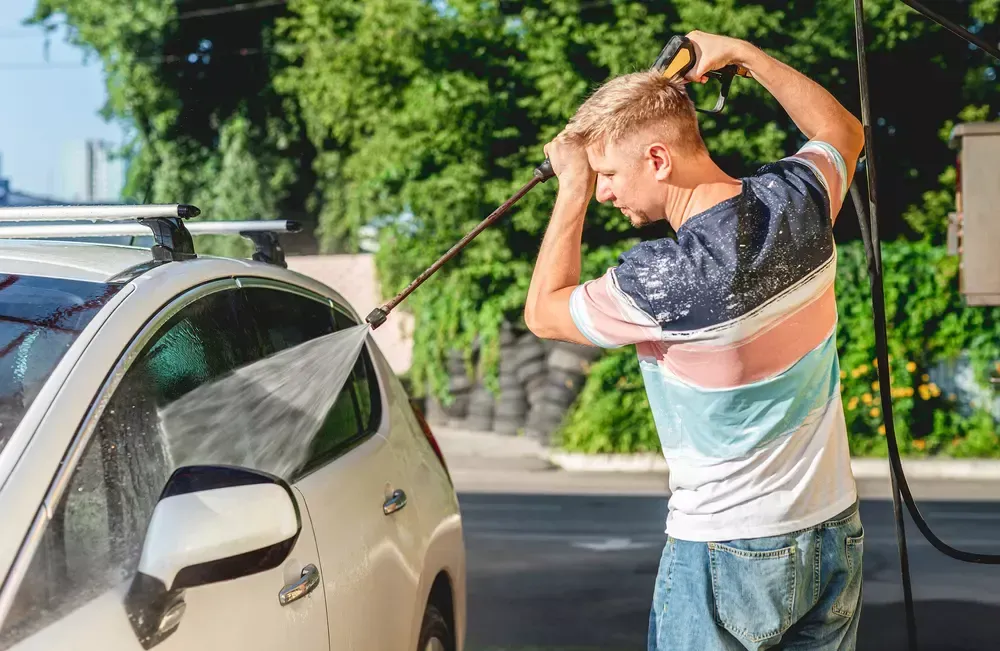
Using abrasive brushes and harsh soaps – or frequenting automatic car washes – can strip away protective layers and create micro-scratches and swirls that dull the glossy finish of your car’s paint.
How to Restore Faded or Sun Damaged Car Paint
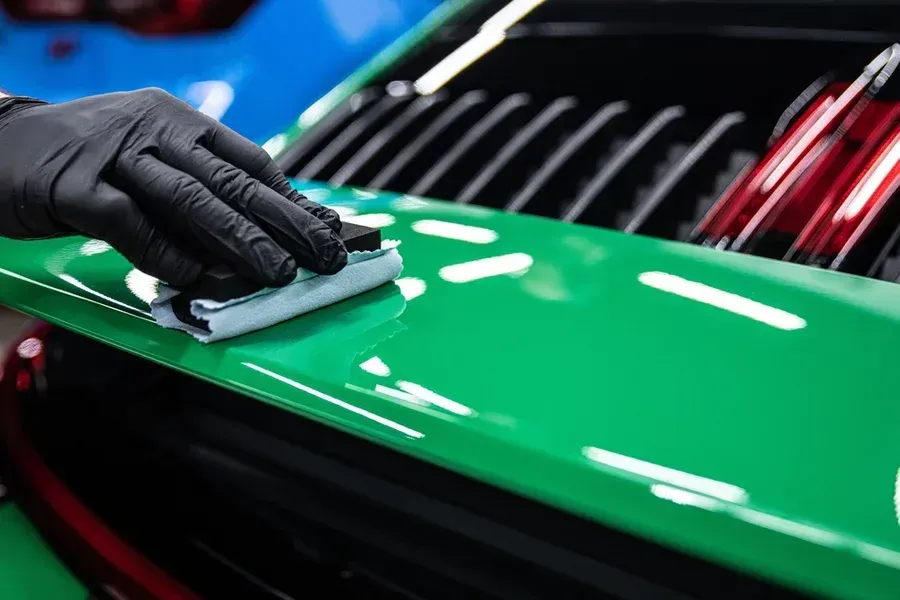
The solution to faded car paint depends on the cause. For paint fading caused by swirl marks, thankfully, paint can usually be corrected (polished or compounded). Then a protective wax can be applied to seal things and add a layer of protection.
Cars with oxidized single stage paint can normally be corrected too, though results may be temporary, and a repaint may eventually be required.
Cars with clear coat failure have traditionally required repainting. Even a small amount of clear coat failure necessitates repainting because once clear coat has started to fail, it cannot be reversed. However at Dent Clinic, we offer a revolutionary new solution: paintless clear coat restoration.
How to Prevent Car Paint Fading
To prevent paint fading on the hood of your car, trunk lid, and everywhere else for that matter, make sure to invest in good car car products and maintain your car by regularly washing and waxing it.
Use paint-safe soaps, clean microfiber towels, and avoid abrasive automatic washes.
Try to avoid parking your vehicle in direct sunlight or where environmental contaminants are common (i.e. under telephone wires where birds congregate, or under trees that drop sap).
Even small changes—like using a car cover or rotating parking positions—can make a noticeable difference.
Professional Clear Coat Restoration & Paint Protection from Dent Clinic
Not sure if your faded car paint is fixable, or if it’s beyond repair? Get in touch; we can help! Looking to protect your car from fading, sun damage, and oxidation? Consider investing in paint protection film.
Related Articles